Getting started as an MSAMM consultant
8 August 2026
You pick up client work in the Oracle tracks you registered for, propose the hours it needs, and are paid for the hours actually agreed. Your rate is never shown to a client.
Before work reaches you
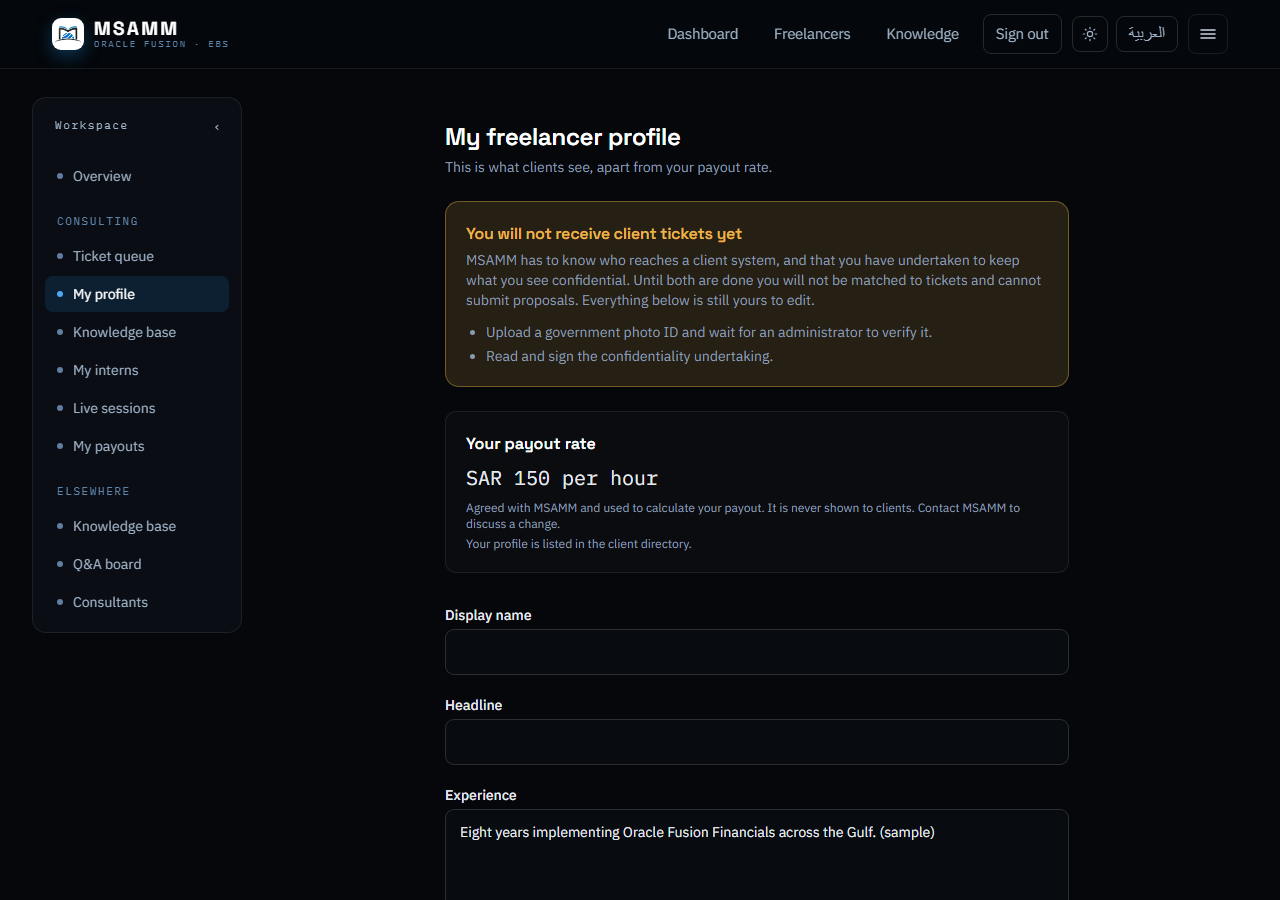
Two things must be in place before a client ticket will route to you: a verified identity document, and a signed confidentiality undertaking at the current version. Until both are done you will not appear in the routing and no tickets will arrive — your profile page lists exactly what is outstanding.
Add your bank details on the same page. Nothing blocks you without them, but MSAMM cannot transfer a payout until they are there, and that is discovered at the worst moment otherwise.
Your queue
Tickets appear in your queue when a client raises one in a track you cover, and you are emailed. Anyone on the track can propose, so proposals are compared rather than assigned.
Proposing hours and a time
A proposal carries three things: the hours you need in quarter-hour steps, how you intend to approach the work, and a date and time you can run the session. You do not quote a rate — your agreed hourly rate is applied by MSAMM.
If the client suggests a different time, they have committed to it, so accepting confirms the engagement. Whoever did not make the last offer is the one who can accept it.
How you are paid
You are paid hours multiplied by your agreed rate, on work that is resolved. The rate captured is the one in force when the client accepted, so a later change never rewrites a payment already earned.
- Support tickets: the hours agreed in the accepted proposal.
- Live sessions: the scheduled length, once you confirm you ran the class.
- Answers and knowledge-base articles: a bonus an admin decides from a participation report, not an hourly rate.
Every payout is approved by an admin before it is settled. You can see the status of each on your payouts page.
The rest of the work
Besides client tickets you can teach a live session when MSAMM asks for one on your track, answer questions on the public Q&A board, draft knowledge-base articles for an admin to publish, and record practical training for an intern who observed one of your sessions.
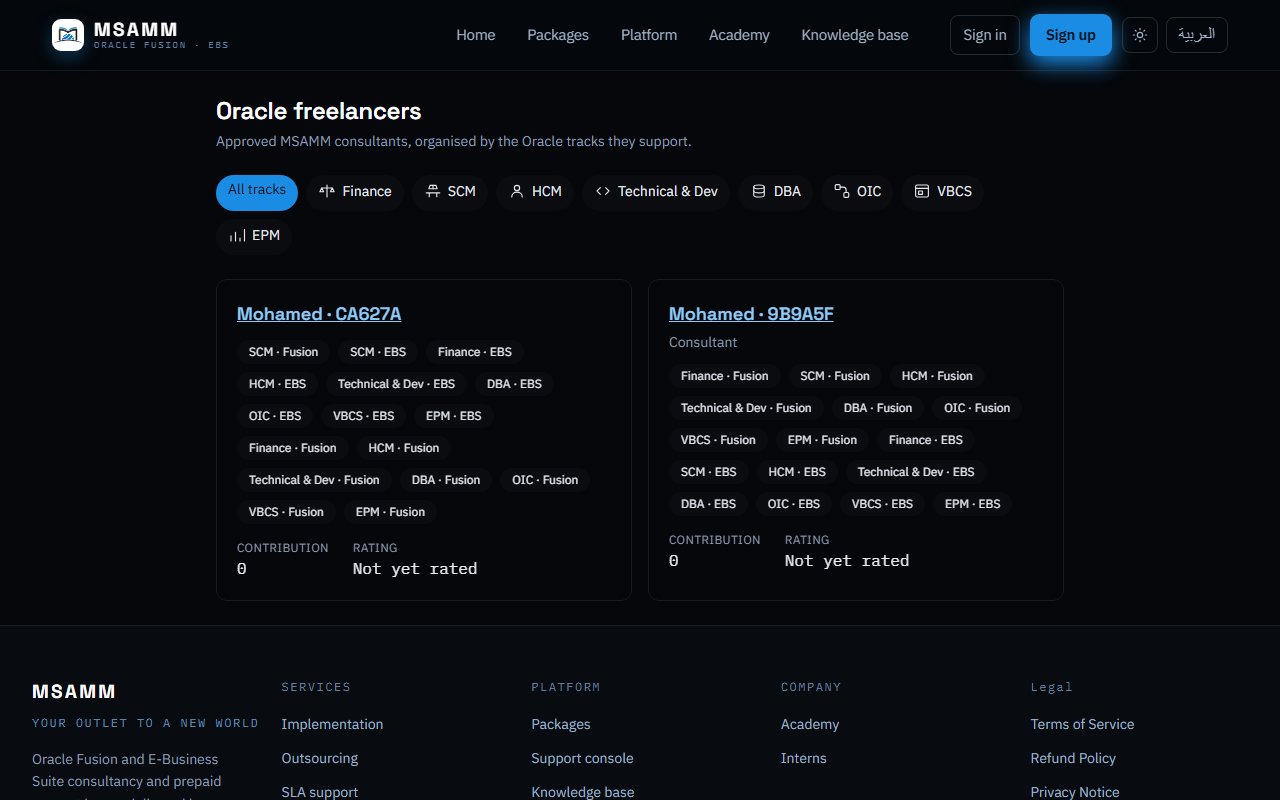
Clients see you as a first name and a reference code, never your full name. That is deliberate and applies everywhere a client can look.